
China’s Invisible Hand Is Distorting Global Oil Markets
For two decades, OPEC ministers, Wall Street analysts, and oil traders have been speaking about the global crude market as if traditional rules still apply. OPEC’s kingpin, Saudi Arabia, is still seen as the swing producer, while OPEC+ is viewed as the balancing mechanism. US shale remains the marginal barrel, while global oil prices are supposedly driven by visible fundamentals such as inventories, demand growth, geopolitical disruptions, and refinery margins.
At present, however, that world does not exist anymore.
Behind the fog of geopolitical instability, the oil market’s reality is that China has emerged as a key strategic player, silently shaping global crude prices through discretionary demand management and inventory control on a scale that can distort market signals.
China is no longer only the world’s largest importer of crude oil. It has become the invisible central banker of oil markets.
In a less unstable geopolitical and geo-economic environment, this shift may not even have caught attention. But current markets and policymakers should take notice. The consequences of this transformation should not be underestimated, especially as they could become dangerously visible during the summer months.
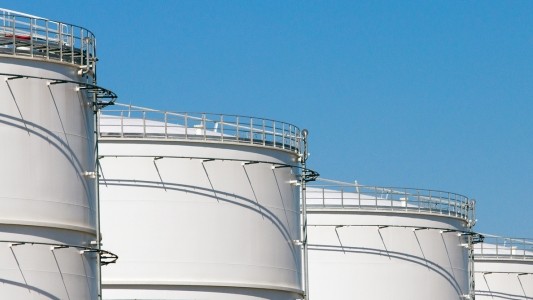
While Western markets have remained confident about an oil glut, China has amassed an estimated 1.2–1.3 billion barrels of crude reserves-potentially the largest national oil inventory-making it a central player in global supply dynamics.
Beijing's increasing control over crude imports and refined product exports is driven by strategic macroeconomic and geopolitical calculations, not normal market logic, creating a dangerous distortion that disconnects prices from actual scarcity.
This distortion risks creating one of the most dangerous oil pricing mismatches since the 1970s, which should concern policymakers and analysts about potential instability.
Related: Saudi Aramco Looks to Raise $10 Billion from Real Estate Asset Deal
The development is already visible in the fundamentals. In early 2026, while geopolitical tensions around Iran and Hormuz escalated sharply, China aggressively increased crude imports and stockpiling. January-February imports surged by around 16% year-on-year, reaching almost 12 million barrels per day. Inventories continued to rise even while refinery demand remained relatively soft. Beijing vacuumed up discounted Russian, Iranian, and opportunistic Middle Eastern barrels from the market.
The situation changed dramatically when the Hormuz crisis intensified, and prices surged.
Beijing has shifted strategy, and imports have collapsed.
In April, Chinese crude imports reportedly fell by around 20% year-on-year, hitting the lowest level in four years. Seaborne imports dropped to 8 million barrels per day, the lowest since 2022. At the same time, China sharply reduced exports of gasoline, diesel, and jet fuel.
This is not normal market behavior.
China has effectively become the shock absorber for global oil markets. Beijing buys when prices are low and builds stockpiles, tightening the market further. When prices rise too fast, China withdraws from spot buying, releases inventory into domestic refining systems and constrains product exports to protect its own economy.
The result is clear: China manages its own energy security while exporting volatility to everyone else.
Even after months of visible disruption, markets still do not fully grasp what this means.
China’s strategy is fundamentally different from the traditional Saudi swing producer model. Saudi Arabia balanced its markets through increases or cuts in production. US shale also played its role through drilling flexibility. China’s mechanism, however, is arguably more destabilizing because it manipulates the visibility of demand itself.
The world no longer knows what “real” demand actually is.
When China suddenly cuts imports by several million barrels per day, traders interpret this as a sign of weak global demand. Prices soften, speculators reduce bullish positions, and analysts forecast oversupply. Yet underneath the surface, physical tightness continues to build because Chinese refineries continue operating, inventories are centrally managed, and export restrictions tighten regional product balances.
These moves create a false bearish signal precisely when the market should be pricing structural scarcity.
Since the Hormuz crisis, this distortion has become especially visible. Even with around 1 billion barrels of supply disruption and logistical losses hitting the market, Brent prices have not exploded to the levels many analysts expected.
Why?
Because China has temporarily absorbed part of the shock through inventory drawdowns and reduced import demand.
Beijing is suppressing the visible symptoms of scarcity. But suppression is not resolution.
The real danger is that financial oil markets now interpret temporary Chinese tactical behavior as evidence that the world remains adequately supplied. That conclusion could prove catastrophically wrong by mid-summer.
The current global system only works as long as China can continue drawing from inventories accumulated over the past two years. But Beijing’s reserves are not infinite. More importantly, China’s strategy increasingly prioritizes domestic stability over global market balancing.
That distinction will matter enormously during the coming months.
The result could be a sudden, violent summer fuel crunch.
This is particularly dangerous because policymakers and financial markets remain focused almost entirely on headline crude prices while ignoring the availability of refined products. Modern economies do not run on crude oil sitting in tanks. They run on diesel, jet fuel, gasoline, and petrochemical feedstocks.
China understands this perfectly.
Beijing’s policy is rational from a domestic perspective. It protects industrial continuity, transportation stability, and inflation management by maintaining refining flexibility within its own borders.
From a global perspective, however, it is deeply destabilizing.
Europe and Asia are especially exposed.
European policymakers still assume weak Chinese imports signal slowing global consumption. Reality, however, is very different. China may simply be shifting from external purchases toward internal consumption of reserves while simultaneously withholding refined products from export markets. The apparent “demand weakness” is therefore largely a statistical illusion.
Asia faces even greater risks.
Most Asian economies remain structurally dependent on imported crude and refined products flowing through Hormuz. China’s inventory position gives Beijing a strategic buffer that countries such as Japan, South Korea, Pakistan, Indonesia, and large parts of Southeast Asia do not possess.
As summer demand rises, these countries may discover that the balancing barrels they historically relied upon from Chinese refiners are no longer available.
The outcome could be bidding wars for diesel and jet fuel across Asian spot markets.
The implications, however, go beyond energy.
China’s oil management strategy increasingly resembles commodity mercantilism rather than participation in transparent global markets. The new mercantilism is built around opacity, used as a strategic tool. Unlike OECD countries, China discloses little reliable information about strategic reserve levels, inventory movements, or coordinated state buying behavior.
The result is asymmetric information power.
While Western traders and analysts attempt to price markets based on shipping flows, customs data, and refinery throughput estimates, Beijing controls the actual inventory levels. China can therefore influence market psychology without fully revealing its own position.
That is real power.
And it is reshaping the global oil system far more fundamentally than most governments currently understand.
At the same time, another, even more consequential development hangs over the market: the renewed engagement between Xi Jinping and Donald Trump.
The Trump-Xi summit is not merely another geopolitical meeting. It could become a meeting between the two dominant powers shaping global oil and gas markets.
The world may now be entering an era in which not Washington and Riyadh, but Washington and Beijing increasingly determine energy stability. The United States controls the world’s largest flexible hydrocarbon production system through shale, LNG, and financial market dominance, while China controls the world’s greatest discretionary demand and inventory system.
Washington influences supply elasticity. Beijing influences demand visibility.
Together, they could shape price formation more than OPEC itself.
The key question for the coming months is whether some form of implicit US-China energy coordination is emerging.
Officially, both remain strategic rivals. Public debate will continue focusing on tariffs, semiconductors, sanctions, and Taiwan. But beneath the surface of geopolitical hostility, both sides share a common interest: preventing uncontrolled energy price escalation.
For Trump, another oil spike toward $130–150 per barrel would threaten inflation control, financial markets, and domestic political stability. For Xi, sustained high energy prices would undermine industrial competitiveness, export performance, and social stability at a moment when China’s economy remains under severe pressure.
Both, therefore, have incentives to suppress volatility.
This is where China’s current crude strategy becomes even more intriguing. Beijing’s behavior may no longer only support domestic protectionism. It may also function as a geopolitical stabilizer ahead of broader understandings between Washington and Beijing on trade flows, sanctions enforcement, Iranian barrels, or even strategic reserve coordination.
Even informal coordination could shape markets.
Indirect signaling between the world’s two largest energy powers may already be placing a soft cap on oil prices. Yet this is highly dangerous because it masks deepening structural tightness underneath the surface.
If Washington and Beijing manage political volatility while physical markets continue to tighten beneath the surface, the risk of eventual repricing increases. Analysts and traders may wrongly conclude geopolitical threats have been contained while inventories quietly erode, spare export capacity shrinks, and refined product availability deteriorates.
For decades, oil markets feared OPEC manipulation. The far larger risk now may be an opaque US-China energy management system operating largely outside traditional transparency mechanisms.
Without openly admitting it, China is now at the center of the system, influencing prices not through production announcements but through the purchase of silence.
Markets still interpret this silence as weakness.
That could become the defining miscalculation of 2026.
In the coming months, the real danger is not an immediate visible crude shortage on futures screens, but delayed recognition that inventories outside China are eroding much faster than expected. At the same time, Beijing continues insulating itself from external volatility.
Once traders finally realize that lower Chinese imports do not mean lower Chinese consumption, the repricing could become violent.
Global commodity markets historically depended on at least some degree of transparency and shared commercial logic. China’s energy strategy increasingly rejects both assumptions. Oil is no longer treated primarily as a traded commodity. It is increasingly treated as a geopolitical instrument of state resilience.
That changes everything.
The world is now confronting an oil market where the largest importer can strategically distort both demand signals and physical availability while remaining largely outside traditional transparency systems.
This is no longer simply another commodity cycle.
It is the emergence of a new energy order in which China acts simultaneously as a consumer, stockpiler, stabilizer, and destabilizer. At the same time, the United States appears increasingly willing to tolerate, or even quietly coordinate around, that reality to prevent a systemic financial shock.
More Top Reads From Oilprice.com